A Call for Feminist Renewal in Times of Division, Indignity, and War
Introduction: A World at a Turning Point
Across all regions, the world is entering a period of profound transformation. Democratic backsliding, armed conflicts, occupation, displacement, widening economic inequality, climate disruption, technological upheaval, and weakening multilateral cooperation are reshaping political, social, and economic systems. Political polarization is deepening, while the number of armed conflicts is rising and militarization is eroding democratic norms and human security.
These crises are interconnected. None of them are gender-neutral. All of them reshape the rights, security, and opportunities of women and girls in all their diversity.
Three decades after the Beijing Platform for Action, progress toward gender equality remains uneven and fragile. Sustainable Development Goal 5 commits the international community to achieve gender equality and empower all women and girls by 2030. Yet current trajectories show that progress remains far too slow. According to UN Women, at the present pace it could take more than a century to close the global gender gap. This projection is not inevitable. With determined political action, sustained investment, and institutional reform, progress can accelerate. Even if the target is not fully achieved by 2030, the commitment to equality must not weaken.
In many contexts, rights once considered secure are under pressure and being attacked by coalitions of extreme right-wing movements, religious fundamentalists, autocrats, and concentrated economic power. In others, structural exclusion from political power, justice systems, and economic opportunity persists. Across regions including the Middle East and North Africa and other fragile and conflict-affected settings, women and girls continue to face severe risks linked to violence, displacement, and political repression.
At the same time, feminist movements around the world continue to articulate new political visions grounded in care, justice, equality, and democratic participation. In a moment marked by division and war, feminist renewal becomes both a political necessity and a democratic imperative.
Democratic, peaceful, and sustainable societies are not possible without gender equality.
The question before us is not whether gender equality matters. The question is whether gender equality will finally become a guiding principle across all policy fields to improve women’s and girls’ daily lives and to transform our societies.
This question becomes even more urgent as democratic space shrinks across the world. According to recent global democracy assessments, around 71% of the world’s population now lives under autocratic forms of governance, where civic freedoms are restricted and women’s rights are often among the first to be undermined. Defending gender equality therefore requires defending democracy itself.
Gender Equality as a Fundamental Human Right and Cornerstone of Just, Inclusive, and Sustainable Societies
Gender equality is a fundamental human right and a cornerstone of just, inclusive, and sustainable societies. Yet across regions, discriminatory legal frameworks, structural barriers to justice, and unequal access to public institutions continue to undermine women’s ability to fully exercise their rights as equal citizens. Strengthening the rule of law, guaranteeing equal protection under the law, and ensuring effective access to justice are essential foundations for democratic legitimacy and social cohesion. Achieving equality requires confronting structural discrimination embedded in institutions, legal systems, and economic arrangements.
Democratic Rights and Women’s Leadership
Strong democracies depend on the full and meaningful participation of women in political life. Women’s leadership strengthens democratic governance, improves public accountability, and broadens the representation of societal interests. Yet women remain underrepresented in political institutions and continue to face barriers ranging from discriminatory political systems to harassment and violence in public life. Advancing gender equality therefore requires democratic reforms that protect civic space, promote fair representation, and enable women to participate fully and safely in political decision-making at all levels. Political parties, trade unions, and civil society organizations must lead by example in advancing inclusive leadership and democratic participation.
Freedom from All Forms of Violence
Gender-based violence remains one of the most widespread human rights violations globally. It takes many forms, including domestic violence, sexual harassment, trafficking, conflict-related sexual violence, and increasingly digital and technology-facilitated abuse. Violence against women and girls not only violates individual dignity and security but also undermines democratic participation and social trust. Preventing and responding to gender-based violence requires strong legal frameworks, survivor-centered support systems, effective prosecution of perpetrators, and sustained societal efforts to transform norms that tolerate or normalize violence.
Economic Empowerment
Gender equality cannot be achieved without economic justice. Women continue to face structural inequalities in the labour market, unequal pay, limited access to resources, and disproportionate responsibility for unpaid care work. Global economic systems continue to rely on invisible and undervalued care work carried primarily by women. Transforming this reality requires investment in universal care infrastructure, recognition and redistribution of unpaid care responsibilities, gender-transformative social protection systems, and labour market reforms that ensure decent work, equal pay, and equal economic opportunities. Economic empowerment is essential not only for individual autonomy but also for inclusive and sustainable economic development.
Women, Peace and Security
The growing number of armed conflicts around the world has devastating consequences for women and girls. Today, more than 600 million women and girls live in conflict-affected settings, where they face heightened risks of violence, exploitation, forced displacement, and loss of access to essential services. In conflict and crisis settings, including across the Middle East and North Africa and other regions affected by war and displacement, women and girls continue to bear disproportionate humanitarian and security burdens.
At the same time, women play critical roles in conflict prevention, peacebuilding, and community resilience. The international community must strengthen implementation of the Women, Peace and Security agenda, including UN Security Council Resolution 1325 and subsequent resolutions. Protecting women and girls in conflict, ensuring accountability for violations of their rights, and guaranteeing women’s meaningful participation in peace processes remain essential to building sustainable peace.
Gender and Climate Justice through a Just Transition
Climate change and environmental degradation disproportionately affect women and marginalized communities, while women remain underrepresented in climate governance and decision-making. Addressing the climate crisis therefore requires gender-responsive approaches that recognize women as leaders, innovators, and agents of change in climate solutions. A just transition toward sustainable economies must integrate gender equality, support community-led and Indigenous-led environmental initiatives, and ensure that climate policies promote both environmental sustainability and social justice.
Closing the Gender Gap in the Digital and AI Divide
Digital technologies and artificial intelligence are transforming economies, labour markets, and democratic processes. Without deliberate safeguards, these transformations risk reproducing existing inequalities and creating new forms of exclusion and discrimination. Women continue to face barriers in access to digital infrastructure, education in science and technology, and participation in digital innovation ecosystems. Closing the gender digital divide and addressing algorithmic bias are essential steps to ensure that technological progress advances equality rather than reinforcing structural inequality.
Intersectionality and Inclusive Equality
Gender inequality intersects with discrimination based on race, ethnicity, disability, age, migration status, socioeconomic background, sexual orientation, and gender identity. Effective policies must recognize these intersecting forms of inequality and ensure that gender equality efforts reach those facing the greatest barriers.
Feminism and International Cooperation
Advancing gender equality requires renewed international cooperation grounded in human rights, democratic values, and solidarity across movements and regions. Feminist renewal depends on collaboration between progressive political parties, feminist movements, labour organizations, youth movements, civil society, and multilateral institutions. Strengthening cross-regional dialogue, policy exchange, and coordinated political action can help build collective strategies capable of addressing the global challenges facing women and girls today.
A Call for Action
This moment calls for renewed political courage and solidarity.
In times of division, indignity, and war, feminist renewal requires building broad alliances capable of defending democratic values, resisting injustice, and advancing equality.
We call on democrats, labour movements, progressive forces, and feminist actors around the world to link arms in common cause and build the political momentum necessary to advance equality, dignity, and justice for all.
Feminist renewal is a response to crisis. It is our persistent counter to those seeking to roll back women’s rights, gender equality, and social progress. It remains a pathway toward more just, democratic, and inclusive societies.
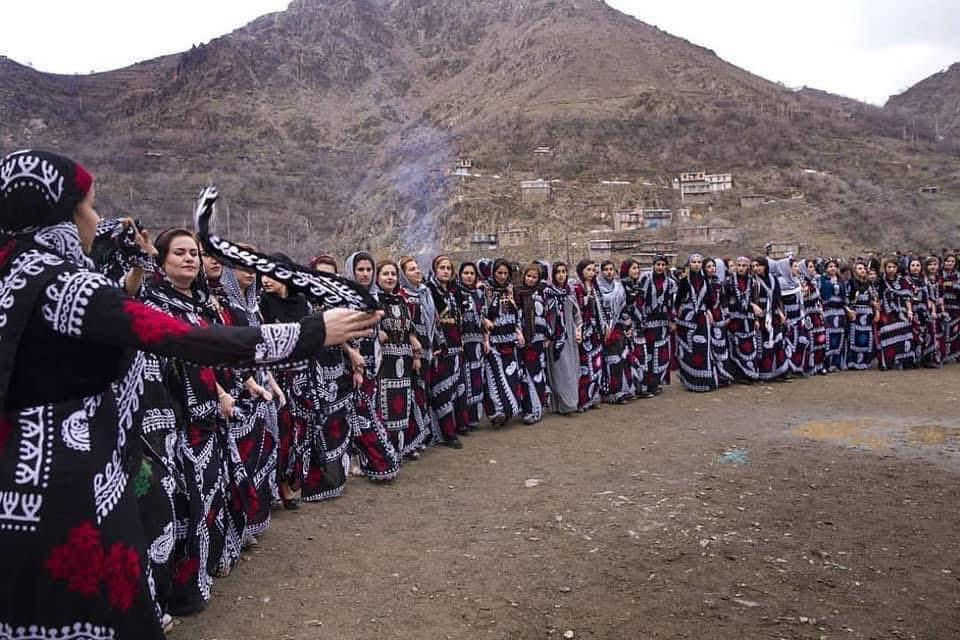
Photo courtesy of the Democratic Party of Iranian Kurdistan (PDKI)

![[ Headline] 24.10.25, Lucerne, Switzerland, Progressive Alliance PA women conference](https://progressive-alliance.info/wp-content/uploads/elementor/thumbs/MAW251024mw859033AdobeRGB-scaled-recq0qxu9kb6pncdi2i7wo6ttne03ppnu58zxxdc74.jpg "Headline: Hier bitte das Thema")
![[ Headline] 25.10.25, Lucerne, Switzerland, Progressive Alliance PA women conference](https://progressive-alliance.info/wp-content/uploads/elementor/thumbs/MAW251025mw860402AdobeRGB-scaled-recs8kegm3kqlleif2kq512xsjz2qfl3t7kc0t0tts.jpg "Headline: Hier bitte das Thema")